
Developing Professional Practice in Storytelling
The Role of Water in the Paramos
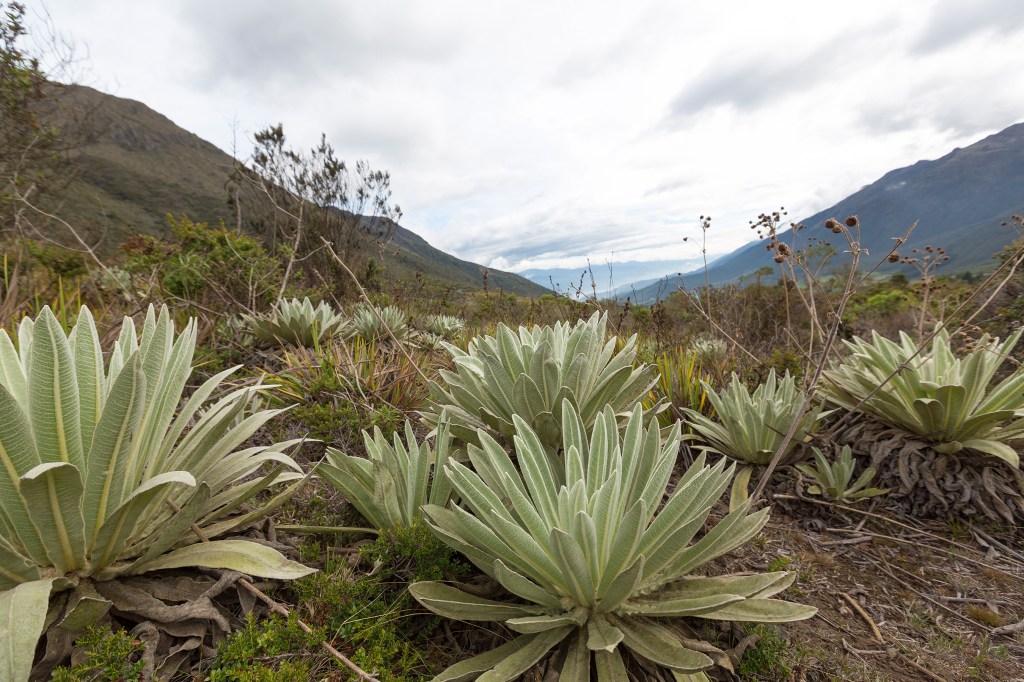
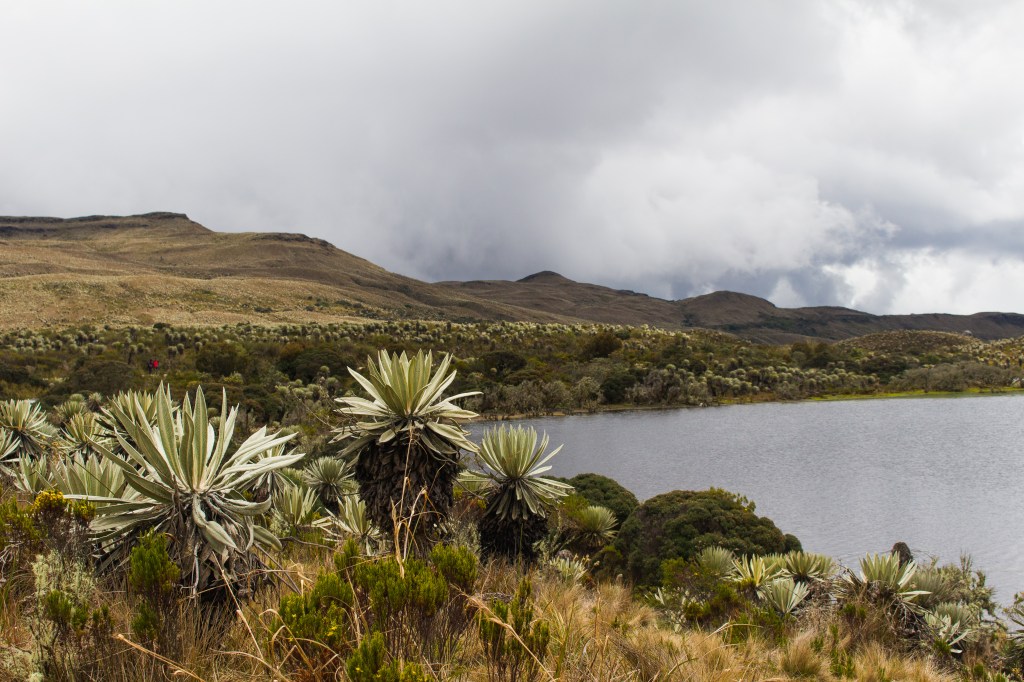
In the tropical Andes found in South and Central American, there is a region called the Páramos, a high-altitude moorland ecosystem with rich soils and giant plants that act like sponges, absorbing and storing rainwater and moisture in the vegetation and soil. The water is released from these plants, called farilejones, Espelitia genus, slowly and gradually, which is crucial for the region and especially during the dry season. The Páramos are the most biodiverse high-altitude ecosystems on Earth. The area is used for crop cultivation and grazing and is also the main source of water for millions of people. In fact, tens of millions of people in the region rely on the páramo ecosystem for drinking water, accounting for approximately 70-80% of the Columbian population. Experts also indicate that this region may serve as a buffer against climate change; the water soaked páramo soils are rich in organic matter and dense in carbon; which affects the release of carbon affecting climate change (Rasout, 2021).
This type of ecosystem includes climate, geological structure, water, hydro morphology, water, sediment, vegetation, and organisms. All these elements must be considered when studying an ecosystem and evaluating the human inputs affecting the area and the outputs or reliance on the water system by humans (Rasout, 2021). Humans are part of the big picture in the Páramos. The area surrounding the Páramos is also known for agriculture, potatoes, and cows, and this activity threatens this ecosystem and the people and wildlife that depend on it (Rasout, 2021). The Páramos is also an important area for study due to how the plant species adapt to the changing climate extremes, including ultraviolet radiation, variable day to night temperatures, and changes in the weather. With climate change, it is yet to be determined what effect that will have on the frailjones or if dryer conditions will increase the risk of fires (Rasout, 2021).
In Colombia, the Páramos are considered important ecosystems for conservation, and the government is heading a plan to delimit them so that conservation measures can be enforced. Many stakeholders in this region support a sustainable management approach but understand the need to support rural livelihoods. It is crucial to understand how the use of the land affects the future. There is a need to develop decision-making that balances ecological interests with economic and social interests. Unfortunately, few quantitative studies have investigated the contribution of plants and organic soils to water yield and flow stability and how this is affected by cultivation and grazing. A new research team that consists of interdisciplinary and international experts, both from the United Kingdom and Columbia, from the humanities and environmental sciences, plan to study the plants and the people (Case for Support: How do Páramos store water?, n.d.). Demonstrating links between land use and management and the critically-important ecosystem service of water provision is essential to co-develop sustainable solutions (Case for Support: How do Paramo’s store water?, n.d.). This interdisciplinary project plans to:
Show how plant and habitat diversity within the Páramos contributes to water regulation via direct storage in vegetation and necromass and from contribution to the soil organic matter; to identify and quantify how crop and livestock farmers engage with the Paramo through their daily farming practices and varied cultural engagements, and how they perceive their practices to affect and be affected by the water regulatory role of the Paramo; to develop capacity in Colombia for optimizing ecosystem services in socially and environmentally sustainable ways, and to inform the debate among stakeholders by providing a better understanding of Paramo functioning, thus enabling sustainable and conflict-free solutions (Case for Support: How do Páramos store water?, n.d.).
This objective of this project will be accomplished by surveying and monitoring the area with state-of-the-art sensing methods and engaging with the area’s people. (Case for Support: How do Páramos store water?, n.d.)
The primary method that will be used to engage with the people will be storytelling. This project will also implement storytelling in the Columbian traditions which is to develop oral narratives into other forms of art and performance and the end result will be an event where these oral stories, songs, visual art, and performances are staged to enable the stories to be preserved and shared. The stories from these stakeholders who live in the Páramos are essential as a way to understand these stakeholder’s usage and reliance on the area and water supply. If only scientific or economic data is collected in decision making, certain voices will be missed who have a stake in the environment. The parties involved in this research project want to ensure that these voices are heard, through the form of storytelling, and that they become part of the decision-making process. Additionally, in collaborating with local people, it could be possible to discover the best way to communicate the scientific knowledge around the research project effectively (Case for Support: How do Páramos store water?, n.d.).
Storytelling has become important in these types of projects because individuals and the cultures like these have a long history to the land where they reside. Lilomaiava-Doktor (2020) writes in terms of Samoan history, “In addition to the memories, emotions, and values that make places significant according to humanist and phenomenological perspectives, the language, proverbs, names, and placenames in Samoan oral traditions demonstrate Samoan relationships with place and ecological knowledge.” This statement most likely could be applied to various cultures around the world, where a people understand place and a sense of the ecology of the area. This is significant because it is imperative to include the people and their stories to learn about a place, and most importantly when applying a management system to monitor and preserve the land. Lilomaiava-Doktor (2020) also writes,
Meanwhile, Māori, Hawaiian, and Samoan ideas about the interconnectedness and sacredness of all things have been neglected, and their ecological viewpoints and the conservation ethic implicit in Indigenous land use have often been overlooked. Accepting that sociocultural meanings of human— environment interactions drive and sustain Indigenous understandings of place and environment behooves us to employ culturally appropriate methods for conducting research on these topics (Lilomaiava-Doktor, 2020).
What the author states here is key – to employ culturally appropriate methods for conducting research. The stories of the inhabitants are essential in facilitating the decision-making of water managers and policymakers, and stakeholders in the Páramos. Through this new project, and with the help of storytelling, the voices of local people will become part of the decision-making and implementation process of a plan to protect the Páramos.
.
Reference List
Case for Support: How do Páramos store water? (n.d.). Loughborough University, pp.1–10.
Forio, M.A.E. and Goethals, P.L.M. (2020). An Integrated Approach of Multi-Community Monitoring and Assessment of Aquatic Ecosystems to Support Sustainable Development. Sustainability, 12(14), p.5603.
Lilomaiava-Doktor, Sa’iliemanu. “Oral Traditions, Cultural Significance of Storytelling, and Samoan Understandings of Place or Fanua.” Native American and Indigenous Studies, vol. 7, no. 1, 2020, pp. 121–151. JSTOR, www.jstor.org/stable/10.5749/natiindistudj.7.1.0121. Accessed 12 Sept. 2021.
Rasolt, D.H. (2021). Páramos at Risk: The Interconnected Threats to a Biodiversity Hotspot. [online] The Revelator. Available at: https://therevelator.org/ [Accessed 8 Sep. 2021].
The Sustainability Message
The term sustainability is used in so many contexts in culture now. However, as it relates to water, which is necessary for human survival, sustainability could not be more relevant. It is necessary to use the term sustainability when discussing environmental concerns and management and how humans impact ecosystems. Human actions have been, in part, been responsible for changing the ecology and chemical and physical characteristics of bodies of water for the past century or perhaps longer (Forio and Goethals, 2020).
Humans cannot exist without water which is a primary reason to observe any changes in water and water production. There are many aspects to the physical characteristics of water like water temperature, conductivity, light penetration, the particle size of the suspended and deposited material, size of the body of water, flow velocity, and the hydrological balance. The chemical quality is tested through the analysis of nutrient concentration (Forio and Goethals, 2020). Water management should take a broader and more holistic approach to manage ecosystems and their relationships to help with decision-making around protecting our water sources (O’Higgins, Lago, and DeWitt, 2020).
Water bodies are not only crucial for the survival of humans, but these ecosystems are also important to wildlife such as amphibians, reptiles, birds, and mammals, and not to forget insects as well. More importantly, a change in the population of amphibians, for example, which as a whole are declining globally, can change the environment of the pest species. Certain species are also relevant in the ecosystem in decomposition and nutrient cycling. As a result of a change in species population, these fluctuations can have an effect on the total ecosystem, which is why monitoring wildlife like amphibians, reptiles, birds, and mammals is necessary (O’Higgins, Lago and DeWitt, 2020).
What is key to management in these areas is the decision-making process that reflects the socio-economic interests of the stakeholders, finding a balance between short and long-term goals, and to have the flexibility to alter and adjust the plan with ecological changes and the changing economic drivers (O’Higgins, Lago and DeWitt, 2020). One such decision-making process that is used is Ecosystem-Based Management (EBM). According to O’Higgins, Lago and DeWitt (2020), sustainability is among the ultimate objectives of EBM, which consists of four areas that align with the social-ecological system (SES), such as resource systems, resource units, governance systems, and users (O’Higgins, Lago and DeWitt, 2020).
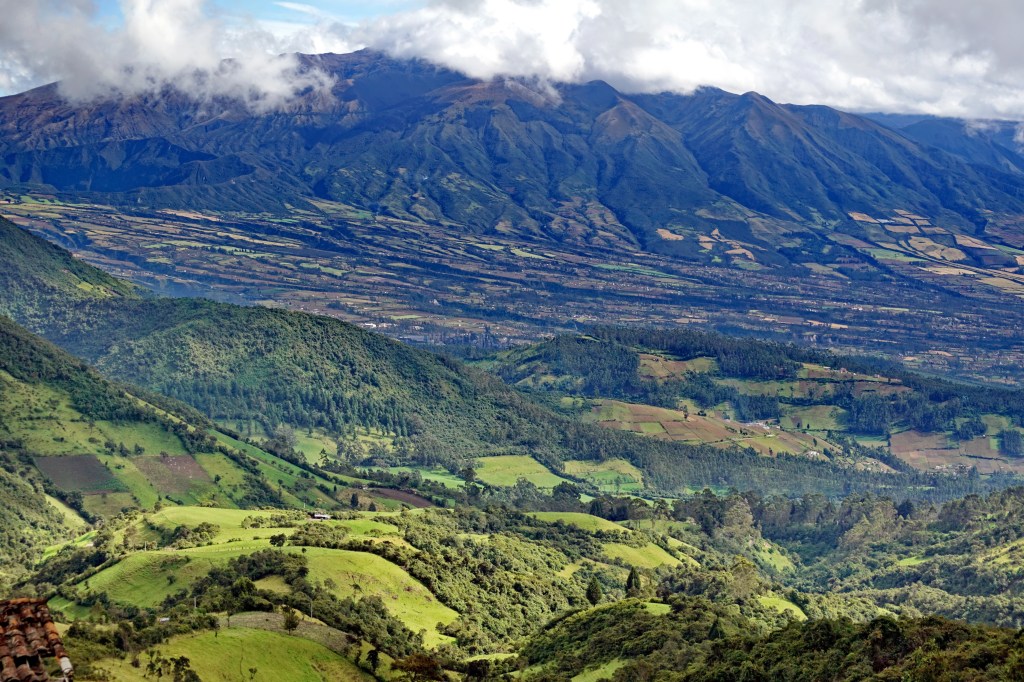
An example of an area where this type of oversight and management is necessary is the economic and tenuous ecological element in tropical Andean ecosystems in Ecuador. This area is a unique natural resource system not only for freshwater but also for the sustainable development of society. The Andean highlands (locally called Sierra) comprises approximately 34% of the country. This water resource system that supports the area is fed by glaciers, páramo, and forests. In addition, the Andean ecosystem consists of many slopes, peaks, and isolated valleys inhabited by many plant and animal species (Célleri and Feyen, 2009).
The water that come from the Andean ecosystem is an important economic and ecological ecosystem in the whole of Andean ecosystem. The water cycle in the Andean ecosystem is affected by land use because the water cycle is closely linked to the forest. More specifically, when the forests or natural landscape are turned into pastures, changes occur in the water cycle (Célleri and Feyen, 2009). As said, the water cycle in the Andean ecosystem is affected by land use, primarily from the conversion of forests or natural landscapes into pastures, because the water cycle is closely linked to the forest (Célleri and Feyen, 2009).
Effects of land use change have a significant effect on the Andean forest hydrology, such as selective tree cutting. Forest removal reduces the ability of the ecosystem to capture atmospheric carbon into the biomass and litter layer and the soil. Also, the effects of conversion from forest to pastures are that intensive grazing reduces interception and transpiration but increases runoff. Deforestation results in some river discharge and an increase in water yield as well. Some results from deforestation have shown that thirty percent of the study catchment was thinned, and after one year after trimming, a significant change in nutrient changes occurred in the forest. Another relevant economic issue that exists in regard to the water from the Andean ecosystem is that it is necessary to irrigate areas agriculture downstream. The runoff water is needed for agriculture to supplement rainfall (Célleri and Feyen, 2009).
The challenges that exist are numerous when conflicting interests, all relevant, affect so many. Deforestation may provide economic value, though the change to the ecosystem may water supply affect agriculture, drinking water, and wildlife. Additionally, an increase in the demand for water may increase with population growth or climate change. All of these challenges support the need to protect and conserve this ecosystem. Two avenues are needed, more scientific information and strategies that promote conservation and an effective decision-making strategy to implement that strategy. It is imperative that the water resources in areas such as these ecosystems be effectively managed, for the sustainability of the ecosystem, and for all that depend on the ecosystem, or there is the possibility that that water, an important resource, could decline, and the water cycle of this ecosystem will not be able to provide for life as it has in the past.
Reference list
Célleri, R. and Feyen, J. (2009). The Hydrology of Tropical Andean Ecosystems: Importance, Knowledge Status, and Perspectives. Mountain Research and Development, 29(4), pp.350–355.
Forio, M.A.E. and Goethals, P.L.M. (2020). An Integrated Approach of Multi-Community Monitoring and Assessment of Aquatic Ecosystems to Support Sustainable Development. Sustainability, 12(14), p.5603.
O’Higgins, T.G., Lago, M. and DeWitt, T.H. eds., (2020). Ecosystem based management, ecosystem services and aquatic biodiversity. Cham, Switzerland: Springer Open, pp.17–38.
The Lough Erne Ecosystem
An ecosystem, specifically a body of water, that is located in two jurisdictions or crosses two national borders, can be even more challenging in terms of management and incorporating the different interests, issues of pollution flowing from one area into the neighboring country, affecting water quality, and other issues of invasive species affecting the use of the water body. That is the case with Lough Erne. Lough Erne is an important ecosystem that provides many benefits yet is also faced with environmental problems (O’Higgins, Lago and DeWitt, 2020).
Lough Erne is a body of water located in Northern Ireland (U.K.) and is in the Republic of Ireland. The lakes are in Northern Ireland, but a substantial part of the catchment is found within the Republic of Ireland. The lake has a history of social and cultural division and a history of human involvement, including hydro electrification, eutrophication, which is a richness of nutrients in a body of water mainly due to runoff from the land causing dense growth of plant-life affecting animal life, and non-native plant species, like pond weed, called Elodea nutalli, which affects recreational use. Agriculture located around Lough Erne contributes to eutrophication in the catchment from fertilizer runoff. Besides agriculture, the Lough Erne water system is important for recreational use like boating, fishing, and tourism (O’Higgins, Lago and DeWitt, 2020).
The Lough Erne system has been settled since Neolithic times, and the ecology of the lake has been affected by human society for a thousand years. There are references back to mythology and the oral tradition of fisheries at the lake. The species found in the lake are salmonids, pollan, eel, and other added species, such as bream, perch, and pike (O’Higgins, Lago and DeWitt, 2020).
The lake system is also essential in hydroelectricity production. For the past sixty years, since the 1950s, the lake has been used for hydroelectricity production. The hydropower stations provide utilities to the Republic of Ireland and in the management of flooding in Northern Ireland. The two jurisdictions collaborated to form the Erne Drainage and Development Act (1950) and the construction of the stations (O’Higgins, Lago and DeWitt, 2020, pp. 445–460), which was a unique step between the two bordering jurisdictions.
One problem for water management at Lough Erne is the introduction of invasive species into the lake, the zebra mussel, and the pondweed. The pondweed affects boating and fishing, and its growth is facilitated by dual factors of the high nutrient levels and water transparency caused by the zebra mussel. Attempting to remove the weed is both costly but ineffective. Thus the need for management systems that combines the needs and objectives of both neighboring countries and the needs of the recreational users and other stakeholders (O’Higgins, Lago and DeWitt, 2020), is necessary to address the environmental conerns.
One management approach that is used for water management is Ecosystem-Based Management (EBM). EMB is a holistic approach to management that includes the interrelated areas of land, air, water, living things, including humans and institutions. It is also necessary to include both the social and ecological aspects of a location through Social-Ecological System (SES). Balancing the needs and interests of all parties and interests could mean trade-offs, which is where an approach of adaptative management can be useful. Therefore, creating water management strategies incorporating information of ecological issues and the users or stakeholders of the area, with legislative objectives that includes both environmental and development goals, is essential, and not to forget one group of stakeholders in management decisions, the farmers. Therefore, an integrated, ecosystem-based management approach to the management of Lough Erne will include all of the lake activities and consequences and map out a plan that effectively meets the many environmental, social, and economic goals of all the stakeholders (O’Higgins, Lago and DeWitt, 2020).
Finally, changes in government between the United Kingdom and the European Union could affect the current environmental regulations, especially in regard to the catchment area which lies across both jurisdictions. Hopefully, a management system that protects the water quality of the lake and systems and provides for the needs of recreational users, and homes and businesses that are dependent on hydropower, will continue despite the complicated nature of being across two different national borders (O’Higgins, Lago and DeWitt, 2020)..
Reference List
O’Higgins, T.G., Lago, M. and DeWitt, T.H. eds., (2020). Ecosystem based management, ecosystem services and aquatic biodiversity. Cham, Switzerland: Springer Open, pp. 445–460.
Get In Touch
- dcarnahan27@gmail.com
 Deborah Carnahan